Solar panels, explained
The panel is the part everyone pictures — but mono vs. poly, efficiency ratings, and cell technologies like PERC and TOPCon decide how much power you actually get. Here is everything that matters, in plain English.
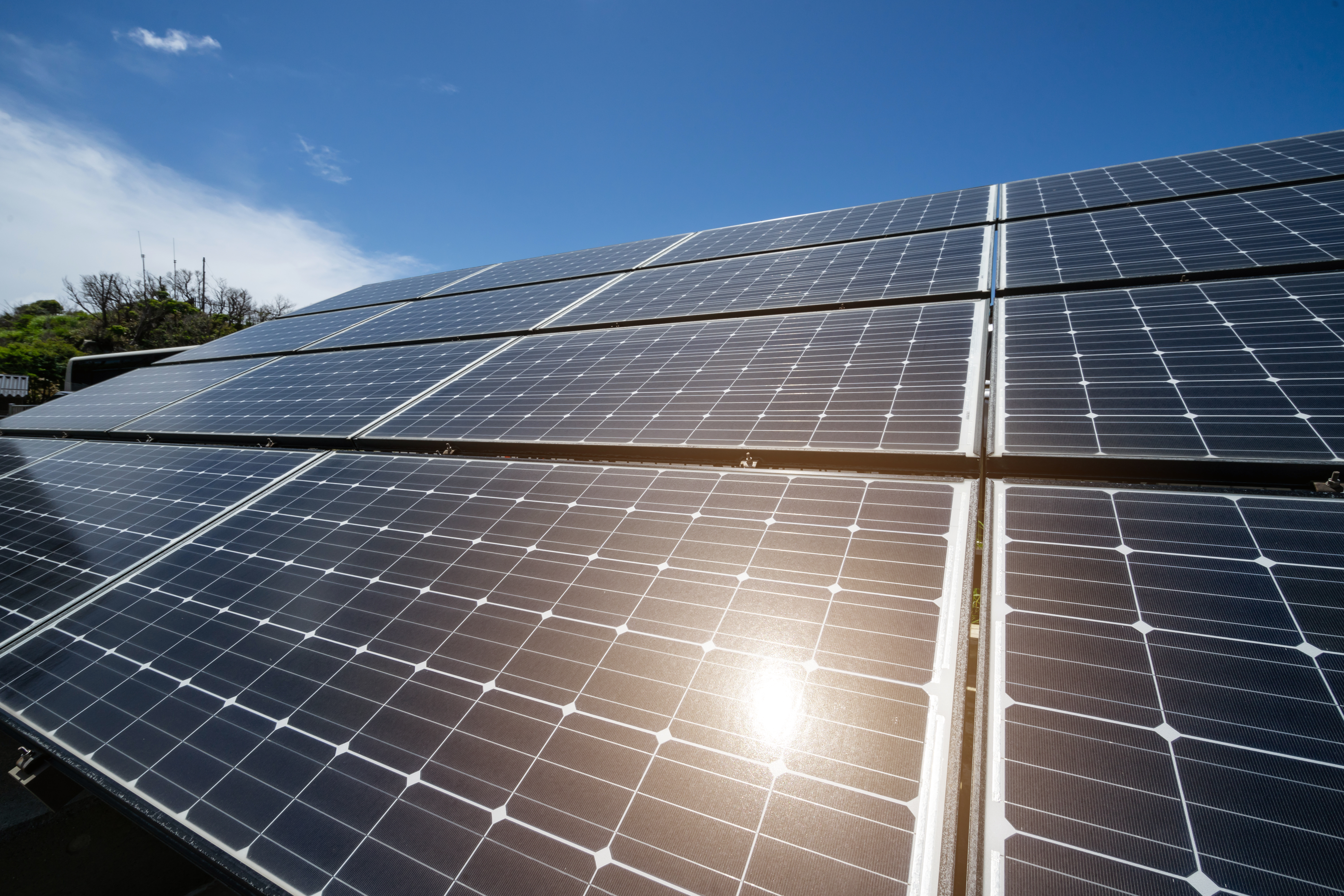
A solar panel turns sunlight into electricity using silicon cells. There are three types — monocrystalline (most efficient, the residential default), polycrystalline (cheaper, less efficient), and thin-film (low efficiency, mostly commercial). For homes with limited roof space, efficient monocrystalline panels almost always win. Beyond the type, the specs that decide real-world output are wattage, efficiency, temperature coefficient, degradation rate, and warranties — and in hot Texas, heat tolerance matters more than most buyers realize.
How a solar panel actually works
A solar panel (or photovoltaic module) is a sheet of wired-together solar cells that turn sunlight directly into electricity. Each cell is mostly silicon — the same semiconductor in computer chips — treated so that when photons of light strike it, they knock electrons loose. Thin metal lines on the cell collect those electrons into a current. That is the photovoltaic effect, and it happens silently, with no moving parts, every time light hits the panel.
A single cell only makes about half a volt, so 60 to 72 cells are wired in series and sealed under tempered glass to form one panel. Panels are then wired together into an array. The electricity they make is direct current (DC), which an inverter converts to the alternating current (AC) your home and the grid use.
The three main types of solar panel
Nearly every panel on a home today is one of three types. They exist because manufacturers constantly trade off efficiency, cost, and manufacturing complexity — and different buyers weigh those differently.
Monocrystalline
Cut from a single, pure silicon crystal. The most efficient (20–23%) and the sleek all-black look most homeowners want. The default residential choice today.
Polycrystalline
Made from many silicon fragments melted together. Cheaper to produce but less efficient (15–17%) with a blue, speckled look. Fading from the residential market.
Thin-film
A thin layer of photovoltaic material on glass or flexible backing. Low efficiency (10–13%) and lots of roof space needed, but cheap and lightweight — mostly commercial and utility scale.
Why monocrystalline won the rooftop
Homeowners almost always have limited roof space, so efficiency — how many watts you fit per square foot — matters more than the raw price per panel. Monocrystalline packs the most power into the least area, and manufacturing improvements have made it nearly as cheap as poly. That is why the vast majority of new residential systems use monocrystalline panels, and why poly has largely been pushed to budget and ground-mount projects.
The cell technologies behind modern panels
Within monocrystalline, the real innovation is in the cell architecture — how the cell is built to capture more light and lose less of it. These are the terms you will see on spec sheets and in installer proposals, explained plainly.
- PERC (Passivated Emitter and Rear Cell) adds a reflective layer behind the cell so light that passes through gets a second chance to be absorbed. It is the mainstream standard today and a meaningful bump over older cells.
- TOPCon and heterojunction (HJT) are the newer premium architectures. They squeeze out higher efficiency and perform better in heat — which matters in hot, sunny climates — at a lot in Texas — at a higher price.
- Half-cut cells slice each cell in two to cut internal resistance and keep producing better when part of the panel is shaded. Most quality panels now use them.
- Bifacial panels capture light on the back as well as the front, picking up reflected light. Great for ground mounts and light-colored roofs; less impactful on a standard shingle roof.
- Multi-busbar & shingled designs reduce the metal lines shading the cell and improve durability, nudging efficiency and lifespan up.
Why heat tolerance matters in hot climates
Panels lose efficiency as they get hot, and a DFW roof can hit 150°F in summer. A panel's temperature coefficient tells you how much output it sheds per degree — premium TOPCon and HJT cells lose less, which is why they are worth a closer look here than in cooler climates.
Panel efficiency and what changes it
Efficiency is the share of sunlight a panel converts to electricity. A 21% panel turns 21% of the sun hitting it into power. Higher efficiency means more watts per square foot — so on a small or shaded roof, paying up for efficient panels can be the difference between covering your usage and falling short.
Real-world output also depends on things no spec sheet controls: roof orientation (south-facing is best in the U.S.), tilt, shade from trees or chimneys, heat, dust, and the rest of the system. A modest-efficiency panel on a perfect south roof can out-produce a premium panel buried in afternoon shade.
The panel specs that actually matter
When you compare proposals, five numbers tell you most of what you need to know:
| Spec | What it means | Good range |
|---|---|---|
| Wattage | Power output per panel at standard test conditions | 400–450W |
| Efficiency | Sunlight converted to electricity | 20%+ |
| Temperature coefficient | Output lost per °C of heat — closer to zero is better | −0.30%/°C or better |
| Degradation rate | Output lost each year as the panel ages | ≤0.5%/yr |
| Warranties | Product (defects) + performance (output guarantee) | 25-yr product & ~87%+ |
A premium panel often carries a 25-year product warranty and guarantees it will still make ~87–92% of its rated power after 25 years. Budget panels may guarantee only 10–12 years of product coverage — a real difference over the life of the system.
Solar panel brands worth knowing
You will see a dozen brand names in installer proposals, and they are not interchangeable. The industry sorts manufacturers into “Tier 1” and below — a financial-stability ranking from Bloomberg, not a quality score, but a useful filter: Tier-1 makers are large, bankable companies more likely to still exist to honor a 25-year warranty. Beyond that, brands cluster into three tiers by price and performance.
Why the brand behind the warranty matters
A 25-year warranty is only worth as much as the company standing behind it. A handful of solar manufacturers have gone bankrupt, leaving owners with worthless paper. Sticking to established, well-capitalized brands is the single best way to make sure your warranty is real.
| Brand | Tier | Known for | Product warranty |
|---|---|---|---|
| Maxeon / SunPower | Premium | Highest efficiency, best warranty | 40 yr |
| Panasonic | Premium | Heat tolerance (HJT cells) | 25 yr |
| REC | Premium | Durable, strong hot-climate output | 25 yr* |
| Qcells | Value | U.S.-made (Georgia), great value | 25 yr |
| Canadian Solar | Value | Reliable, widely available | 25 yr |
| JinkoSolar | Value | World’s largest, TOPCon (Tiger Neo) | 25 yr |
| Trina Solar | Value | High-output value TOPCon | 25 yr |
| Silfab | Mid | North-American made, sleek | 25 yr |
| Mission Solar | Mid | Made in Texas (San Antonio) | 25 yr |
*Warranty length often increases to 25 years when installed by a certified installer. Always confirm the exact warranty on your proposal — terms vary by product line and installer certification.
Premium brands
Maxeon / SunPower
The long-standing efficiency leader, with an industry-best 40-year warranty on its top panels.
Pros
- Highest efficiency available (22%+)
- Class-leading 40-year warranty
- Excellent long-term durability
Cons
- The most expensive option
- Overkill for large, sunny roofs
Panasonic
Heterojunction (HJT) cells with an excellent temperature coefficient — a strong fit for hot climates.
Pros
- Best-in-class heat tolerance
- High efficiency & 25-yr warranty
- Trusted global brand
Cons
- Premium pricing
- Fewer installers stock it
REC
A European brand known for rugged, high-output panels that hold up well in hot climates.
Pros
- Strong real-world hot-weather output
- Robust build quality
- Up to 25-yr warranty (certified install)
Cons
- Above-average price
- Best warranty needs a certified installer
Value brands (the sweet spot for most homes)
Qcells
The value leader in the U.S., with major manufacturing in Georgia — the brand many installers default to.
Pros
- Excellent price-to-quality balance
- U.S.-made, widely available
- Solid 25-year warranty
Cons
- Mid-tier (not peak) efficiency
- Not the absolute best in extreme heat
Canadian Solar & JinkoSolar
Two of the world’s largest makers, offering reliable, affordable panels — Jinko’s Tiger Neo uses modern TOPCon cells.
Pros
- Strong value pricing
- Huge production scale & availability
- Modern TOPCon options
Cons
- Warranty service can be slower
- Efficiency trails premium brands
Regional & notable
Silfab builds sleek, high-quality panels in North America and is a popular mid-premium pick. Mission Solar is made right here in San Antonio, Texas — appealing if buying American-made and local matters to you, though its lineup is smaller and tops out at mid efficiency. Trina Solar rounds out the value field with high-output TOPCon panels. For most homes, a quality value-tier panel (like Qcells) hits the best balance; premium brands earn their price on small, shaded, or all-electric homes where every watt of roof space counts.
Solar panel warranties: what to expect
Panels come with not one warranty but two from the manufacturer — plus a separate one from your installer. Understanding the difference is essential, because a cheap panel with weak coverage can cost you far more over 25 years than it saves up front.
Product (materials) warranty
Covers manufacturing defects — the panel itself failing. The industry has moved to 25 years, with premium brands offering 30–40. Budget panels may offer only 10–12.
Performance (power) warranty
Guarantees minimum output as the panel ages. A typical panel is warranted to still produce ~87–92% of rated power at year 25.
Workmanship warranty
From your installer, covering the installation itself — mounting, wiring, and roof penetrations. Ranges from 10 to 25 years; longer is a sign of a confident installer.
| Warranty type | What it covers | Good | Premium |
|---|---|---|---|
| Product / materials | Defects in the panel | 25 yr | 30–40 yr |
| Performance / power | Output retained at year 25 | ~85% | ~92% |
| Annual degradation | Output lost each year | 0.5% | ≤0.25% |
| Workmanship (installer) | The installation itself | 10 yr | 25 yr |
What to watch for in the fine print
- Who handles a claim? A good installer manages warranty claims for you. Otherwise you deal directly with the manufacturer — painful if they are overseas.
- Is shipping/labor covered? Some product warranties replace the panel but not the labor to swap it. Premium brands often cover both.
- Is it transferable? A transferable warranty adds resale value if you sell the home.
- Is the manufacturer bankable? A 25-year promise is only as good as the company behind it — favor established, well-capitalized brands.
- Match the installer to the panel. The longest workmanship coverage comes from established local installers; fly-by-night crews and their warranties tend to disappear.
The warranty you will actually use
Panels rarely fail outright — the inverter is the part most likely to need service. So weigh inverter and workmanship coverage at least as heavily as the panel warranty when you compare quotes.
How to choose the right panels
- Start with your roof, not the brand. Small or shaded roof? Prioritize high-efficiency monocrystalline. Big, sunny roof? You can hit your target with mid-tier panels and save money.
- Weigh heat tolerance for your climate. A better temperature coefficient (and TOPCon/HJT cells) pays off across hot, sunny summers.
- Read both warranties. Compare product and performance coverage, and confirm the manufacturer is solid enough to honor them.
- Match panels to your inverter and battery. Panels are one of three core components — they have to be designed together. See our inverter and battery guides.
- Compare full system quotes, not panel stickers. Price per watt installed — covering panels, inverter, racking, labor, and warranty — is what actually matters.
Frequently asked questions
What is the best type of solar panel for a home?
What is the difference between monocrystalline and polycrystalline panels?
How long do solar panels last?
Are more efficient solar panels worth it?
What is PERC, TOPCon, and bifacial?
Get matched with installers who spec the right panels
Tell us about your roof and usage, and up to four independently reviewed DFW installers will design a system with the right panels — and quote it accurately. Upload a recent bill for an exact number.
- Local pros spec the right equipment for your home
- Upload a bill for an exact, accurate quote
- You choose who to hire — zero pressure