How to pay for solar
There are four ways to pay for a solar system — cash, a loan, a lease, or a PPA — and the one you choose changes your savings by tens of thousands of dollars. Here's exactly how each works, what it really costs, and how to pick the right one for your home.
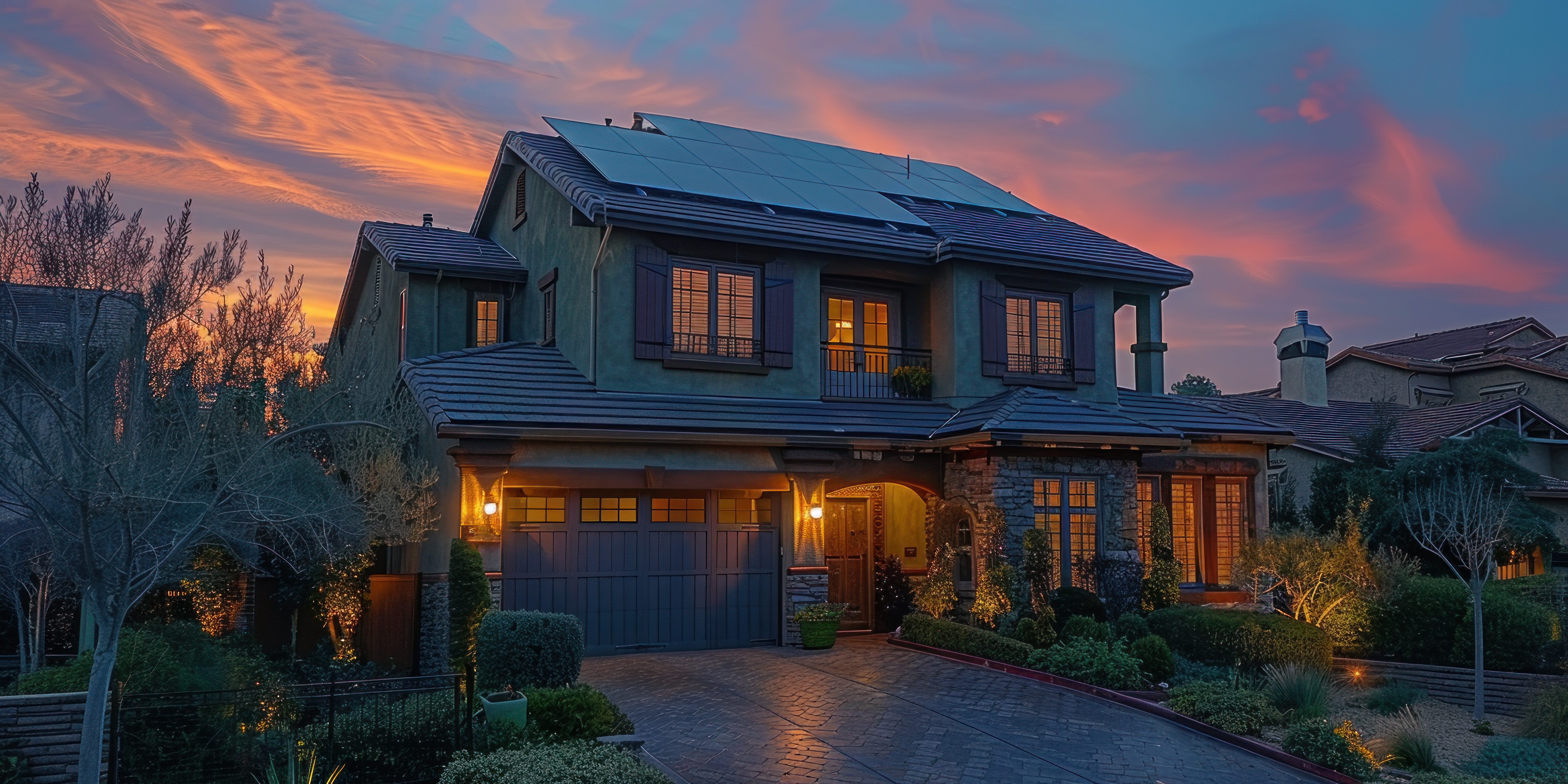
You can pay for solar four ways. Cash is the cheapest over time — no interest, you own everything, fastest payback. A solar loan lets you own the system with little or nothing down, spreading the cost over 10–25 years (watch for "dealer fees"). A lease means a company owns the panels and you pay a fixed monthly fee to use them. A PPA is similar but you pay per kilowatt-hour produced. Cash and loans maximize savings and build home value; leases and PPAs minimize upfront cost and hassle but deliver the least long-term return. Below, we break down each in full detail.
The four ways to pay for solar
Every solar payment method falls into one of two camps: ownership (cash or loan — the system is yours) or third-party ownership (lease or PPA — a company owns it and you pay to use the power). That single distinction drives everything else: your savings, your responsibilities, who claims incentives, and what happens when you sell your home.
| Option | Upfront cost | You own it? | Lifetime savings | Best for |
|---|---|---|---|---|
| Cash | Full price | Yes | Highest | Lowest total cost, fastest payback |
| Solar loan | $0–low down | Yes | High | Owning without paying all upfront |
| Lease | $0 down | No | Low | No upfront cost, hands-off |
| PPA | $0 down | No | Low | Paying only for power produced |
Ownership is the dividing line
When you own the system (cash or loan), every kilowatt-hour it makes is free power that builds equity in your home. When a third party owns it (lease or PPA), you're really just buying cheaper electricity — useful, but a fraction of the long-term value. Keep that distinction in mind as you read on.
Paying cash for solar
Buying your system outright is the simplest and most rewarding option financially. You pay the full installed price once, and from the day it switches on, every bit of power it produces is yours at no ongoing cost.
Why cash wins on cost
- No interest, ever. You skip years of finance charges, so your lifetime cost is the lowest of any option.
- Fastest payback. With nothing siphoned off to a lender, your energy savings recoup the cost in the shortest time — commonly the difference between a payback in the low teens of years versus much longer.
- You keep every incentive. Any rebate or credit you qualify for is yours, not a financing company's.
- Maximum home-value boost. An owned, paid-off system is an asset that can raise your home's resale value with no lien attached.
The trade-off
The obvious catch is the upfront outlay — a typical system runs $20,000–$38,000 before incentives, and more with a battery. That's a meaningful chunk of capital. The fair question to ask isn't just "can I afford it," but "what else would this money earn?" If your cash would otherwise sit in a low-yield account, solar's effective return is often very attractive. If you'd be pulling it from higher-returning investments, a low-rate loan may make more sense.
Best for
Homeowners who have the capital available, want the lowest possible lifetime cost, and value owning the system outright with no monthly payment. If that's you, cash is almost always the mathematically optimal choice.
Solar loans
A solar loan is the most popular way to go solar without paying everything upfront. You borrow the cost of the system, own it from day one, and repay over time — keeping nearly all the benefits of a cash purchase while preserving your savings. But solar loans have quirks worth understanding before you sign.
How solar loans work
- You own the system immediately, just as if you'd paid cash — so you keep its production value, incentives, and resale benefit.
- Terms run 10–25 years, with monthly payments often designed to be close to (or less than) the utility bill you're replacing.
- Rates vary widely based on your credit, the lender, and the loan type. The headline rate is not the whole story (see dealer fees below).
- Little or nothing down is common, which is why loans are so widely used.
Secured vs. unsecured solar loans
Secured loans
Backed by collateral — usually your home equity (a HELOC or home-equity loan). Lower interest rates, but your home is on the line and approval takes longer.
Unsecured solar loans
No collateral, faster approval, and offered directly through many installers. Convenient, but rates are higher and "dealer fees" are common.
The dealer fee: the most important thing to understand
Here's the catch that surprises most borrowers. Many low-advertised-rate solar loans carry a dealer fee (sometimes 15–30% of the loan) that the lender charges the installer to "buy down" the interest rate. The installer doesn't absorb that fee — it's baked into the price of your system. So a loan advertised at 1.99% can actually cost you more overall than a higher-rate loan with no dealer fee, because you're financing a larger amount.
How to see through it
Always ask for the cash price and the financed price of the exact same system. If the financed price is meaningfully higher, the gap is the dealer fee. Then compare the total amount you'll repay across options — not the monthly payment or the advertised rate, both of which can hide the true cost.
The re-amortization assumption
Some solar loans are structured around the old federal tax credit: the monthly payment assumes you'll make a large lump-sum payment (the credit amount) within the first 12–18 months, "re-amortizing" the loan to keep payments low. With the federal credit no longer available for 2026 purchases, be especially careful — if a quote's payments assume a credit you won't receive, your real payment jumps after the deadline passes. Confirm exactly what any payment schedule assumes.
Best for
Homeowners who want to own their system and capture its full long-term value but prefer to spread the cost over time rather than pay upfront. A loan with no (or low) dealer fee and a transparent total cost can come very close to the economics of paying cash.
Solar leases
A solar lease flips the model: instead of owning the system, you rent it. A third-party company installs and owns the panels on your roof, and you pay a fixed monthly amount to use the electricity they produce — typically less than your old utility bill.
How a lease works
- $0 down in most cases — the provider covers the full cost of equipment and installation.
- Fixed monthly payment for the term (often 20–25 years), regardless of how much the system produces.
- The provider owns and maintains the system — repairs, monitoring, and inverter replacements are their responsibility, not yours.
- An annual "escalator" of roughly 1–3% is common, meaning your payment rises a little each year. Always check whether your lease has one.
The trade-offs
Because someone else owns the system, you don't get the incentives, you don't build equity, and your savings are the smallest of any option — usually a modest discount on your electricity rather than the dramatic bill reduction owners see. Leases can also complicate selling your home: a buyer must qualify to assume the lease or you must buy it out, which adds friction to a sale.
Best for
Homeowners who want solar with zero upfront cost and zero maintenance responsibility, can't use tax incentives anyway, and value simplicity over maximizing savings. If you plan to move soon, weigh the home-sale complications carefully.
Power purchase agreements (PPAs)
A PPA is a close cousin of the lease — same third-party-ownership model, same $0 down — but you're billed differently. Instead of a fixed monthly fee, you pay a set price for each kilowatt-hour the system actually produces.
Lease vs. PPA: the key difference
It comes down to what you're paying for. A lease charges a flat monthly rate to use the equipment — predictable, regardless of output. A PPA charges per unit of energy generated, so your bill rises in sunny months and falls in cloudy ones. With a PPA you pay only for power you actually get; with a lease you pay the same whether the sun shines or not.
- You pay per kWh at a contracted rate, usually below your utility's retail rate.
- A rate escalator (often 1–3% per year) is common, so confirm the long-term trajectory.
- The provider owns, maintains, and insures the system and keeps the incentives.
- Variable bills track production month to month, unlike a lease's fixed payment.
Watch the escalator
The single most important number in a lease or PPA is the annual escalator. A 2.9% yearly increase compounds significantly over 25 years and can erode your savings — sometimes to the point where your payment outpaces what the utility would have charged. Always model the payment in the final years, not just year one.
Best for
The same profile as a lease — $0 down, hands-off, no use for tax incentives — but specifically for homeowners who'd rather pay only for the energy actually produced than commit to a flat monthly fee.
Comparing all four side by side
Put together, the trade-offs form a clear spectrum: from cash (most savings, most upfront, most responsibility) to a PPA (least upfront, least savings, least responsibility). Here's the full comparison.
| Factor | Cash | Loan | Lease | PPA |
|---|---|---|---|---|
| Upfront cost | Full price | $0–low | $0 | $0 |
| Who owns it | You | You | Provider | Provider |
| Lifetime savings | Highest | High | Low | Low |
| Maintenance | You | You | Provider | Provider |
| Gets incentives | You | You | Provider | Provider |
| Adds home value | Yes | Yes | Complicates sale | Complicates sale |
| Monthly payment | None | Loan payment | Fixed fee | Per kWh |
The pattern in one line
Ownership (cash & loan) trades more cost or commitment for far greater long-term value. Third-party ownership (lease & PPA) trades long-term value for zero upfront cost and zero hassle. There's no universally "right" answer — only the one that fits your finances and goals.
How incentives affect what you pay
Incentives can dramatically change the real cost of solar — but who captures them depends entirely on how you pay.
The 2026 reality
The big change: the 30% federal residential clean energy credit expired at the end of 2025 and is no longer available for homeowner purchases in 2026. This matters most for cash and loan buyers, who previously claimed it directly. Budget as though it doesn't exist for a new purchase — because it doesn't.
What's still available
State & utility rebates
Many states, utilities, and co-ops still offer rebates — especially for solar-plus-battery systems. Owners (cash/loan) claim these directly. Availability varies widely by location.
Property-tax exemptions
Many states exempt the home-value added by solar from property taxes, so an owned system's resale boost doesn't raise your tax bill.
Net metering
Credit for exported power is an ongoing benefit that flows to whoever pays the bill — and over time it's often worth more than any one-time rebate. How net metering works →
Pass-through on lease/PPA
Because third-party owners may qualify for commercial incentives, they can sometimes pass a portion through in their pricing — one reason a lease/PPA can still be competitive on rate.
For the full picture of how incentives, net metering, and rising rates combine into your real return, see our is-solar-worth-it guide.
How to choose the right option
The best financing isn't universal — it's whichever matches your finances and priorities. Work through these questions in order:
- Can you pay cash without straining your finances? If yes, and the money would otherwise earn little, cash gives the best return. If it would come from higher-yield investments, compare against a low-rate loan.
- Want to own but not pay upfront? A solar loan is your answer — just demand the cash price and the financed price, confirm any dealer fee, and compare the total amount repaid across lenders.
- Is zero upfront cost and zero maintenance your priority? A lease or PPA delivers that, at the cost of much smaller long-term savings. Choose a lease for a predictable flat fee, a PPA to pay only for production.
- Might you sell the home soon? Ownership (cash/loan) is cleaner at resale. A lease/PPA must be transferred or bought out — factor that in.
- Scrutinize the fine print. For loans, the dealer fee and re-amortization assumptions. For lease/PPA, the escalator and buyout terms. These details, not the headline number, determine your real cost.
Compare offers the right way
Get multiple proposals and compare them on total lifetime cost, not monthly payment or advertised rate. The same system financed two ways can differ by many thousands of dollars once fees and escalators are included. A good installer will lay out every option transparently — that's a sign you're working with the right one.
Frequently asked questions
What's the best way to pay for solar panels?
Is it better to lease or buy solar panels?
What's the difference between a solar lease and a PPA?
Do solar loans have hidden fees?
Can I still get a tax credit to help pay for solar in 2026?
Does financing solar with a loan still save money?
Compare financing options from top-rated installers
The best way to understand your real options is to see them side by side. Upload a recent energy bill and up to four independently reviewed installers will quote your system with cash, loan, and lease/PPA options laid out clearly.
- See cash, loan & lease costs side by side
- Upload a bill for an exact, accurate quote
- You choose who to hire — zero pressure