Solar inverters, explained
The inverter converts your panels’ DC power into the AC your home uses — and quietly decides how much energy you keep. String, micro, or hybrid? Here is how each works and which fits your roof.
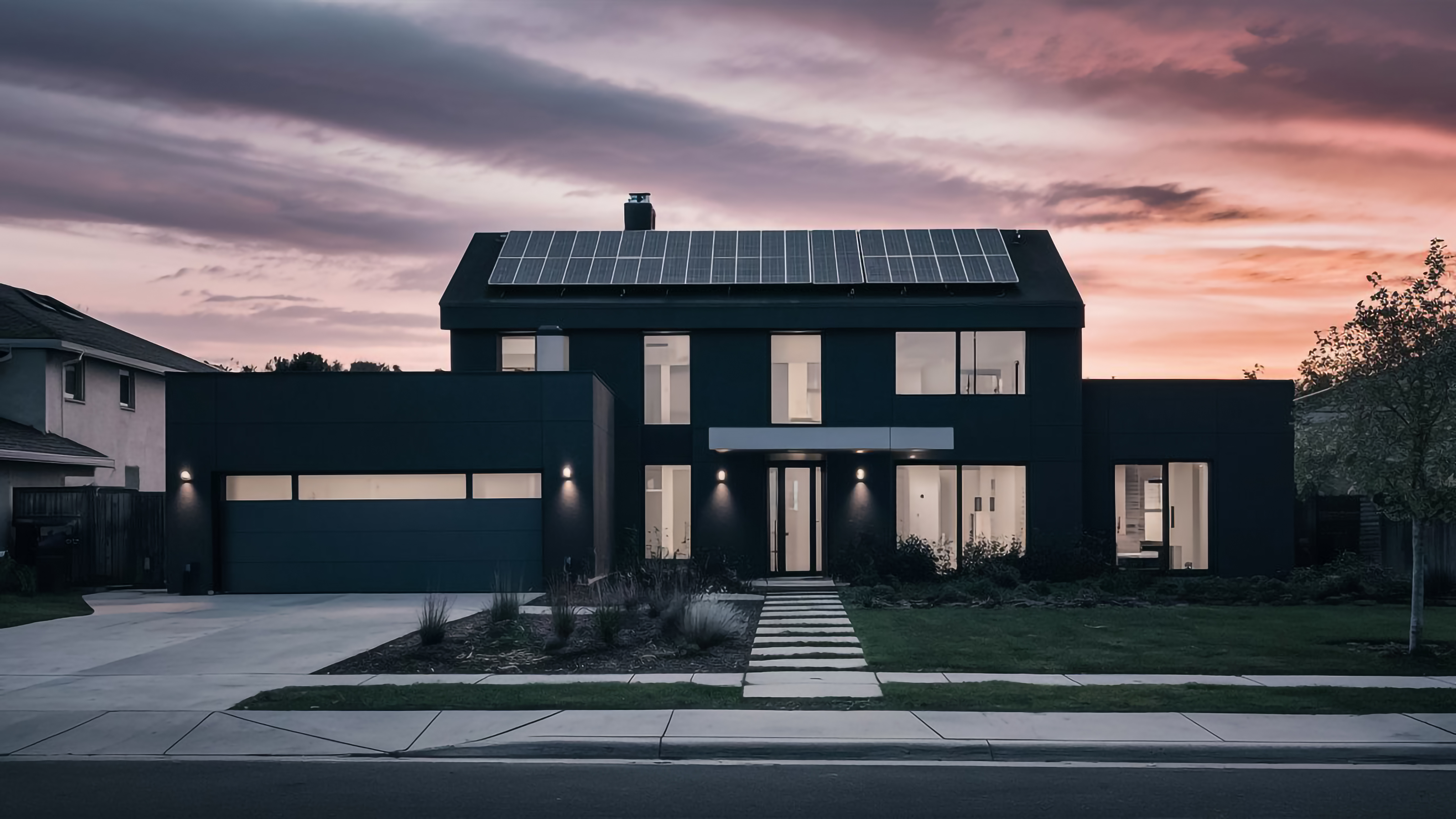
A solar inverter converts the DC electricity from your panels into AC your home and the grid use — it is the brain of the system. There are three types: string inverters (one central box, cheapest, best for simple sunny roofs), microinverters (one per panel, best for shade and complex roofs, panel-level monitoring), and power optimizers (a middle path). If you want a battery — which can qualify for local storage rebates — choose a hybrid/battery-ready inverter so you do not buy twice.
What a solar inverter does
Your panels produce direct current (DC), but your home, appliances, and the grid all run on alternating current (AC). The inverter is the device that converts DC into usable AC — making it the single most important piece of electronics in your system. People often call it the brain of a solar install, and for good reason: it also manages safety shutoffs, tracks production, and decides how power flows between your panels, your home, the grid, and any battery.
It is also the component most likely to need service. Panels routinely last 25–30 years, but inverters work hard every day and often carry shorter warranties — so the type you choose affects both your production and your long-term maintenance.
The main types of solar inverter
There are three architectures you will be quoted, plus an add-on. They exist to solve one core problem differently: do you convert power for the whole array at once, or panel by panel?
String inverter
One central box converts power for a whole "string" of panels. Cheapest and proven — but the string produces at the level of its weakest (most shaded) panel.
Microinverters
A tiny inverter on each panel, so every panel produces independently. Best for shade and complex roofs, with panel-level monitoring — at a higher price.
Power optimizers
A middle path: optimizers on each panel condition the power, then a central string inverter converts it. Panel-level performance with one inverter.
The shade problem in one sentence
With a basic string inverter, one shaded or dirty panel can drag down the whole string; microinverters and optimizers isolate each panel so the rest keep producing — which is why roofs with trees, dormers, or multiple angles usually justify them.
String vs. micro vs. optimizer, compared
| Factor | String | Microinverters | Optimizers |
|---|---|---|---|
| Best for | Simple, unshaded roofs | Shade & complex roofs | Some shade, value |
| Panel-level monitoring | No | Yes | Yes |
| Shade tolerance | Weakest-panel limited | Per-panel | Per-panel |
| Upfront cost | Lowest | Highest | Middle |
| Failure point | One central box | Distributed (redundant) | Central inverter + units |
| Typical warranty | 10–12 yr | 25 yr | 12–25 yr |
Common brands: Enphase (microinverters), SolarEdge (optimizers + string), and SMA, Fronius, Tesla (string/hybrid). In areas where roofs often have some afternoon shade, microinverters or optimizers are a frequent — and usually worthwhile — recommendation.
Hybrid & battery-ready inverters
A hybrid inverter can manage both solar panels and a battery in one unit, handling the extra conversions that storage requires. If you are adding a battery now — or think you might later — a hybrid or "battery-ready" inverter avoids buying a second device down the road.
This matters if storage is on your radar: a battery can qualify for local utility storage rebates where available, and it is how you keep the lights on during grid outages. Planning your inverter around a battery from day one is often the smarter sequence. There is also a coupling choice — DC-coupled systems (battery ties in on the DC side) are typically more efficient for new builds, while AC-coupled setups are easier to add onto an existing array. Your battery and inverter have to be designed together.
The inverter specs that matter
- Efficiency (CEC weighted). How much DC survives the conversion to AC — look for 97%+.
- Warranty. Microinverters often carry 25 years; basic string inverters 10–12. Since the inverter is the likeliest part to fail, this matters.
- Clipping / sizing ratio. If the inverter is undersized vs. your panels, it "clips" peak production. A little is fine; too much wastes power.
- Monitoring. Panel-level (micro/optimizer) lets you and your installer spot a single underperforming panel instantly.
- Battery & backup support. Whether it is hybrid/battery-ready, and whether it can power your home during an outage.
Solar inverter brands worth knowing
Unlike panels, where a dozen brands compete, the residential inverter market is dominated by a few names — and the brand often determines the architecture you get. Here are the makers you will actually be quoted in DFW, and how they stack up.
| Brand | Type | Best for | Warranty |
|---|---|---|---|
| Enphase | Microinverters | Shade, complex roofs, monitoring | 25 yr |
| SolarEdge | Optimizers + string | Panel-level at lower cost | 12 yr* (25 opt.) |
| Tesla | String / hybrid | Powerwall battery pairing | 12.5 yr |
| SMA | String / hybrid | Simple, sunny roofs | 10 yr* (ext.) |
| Fronius | String / hybrid | Reliable string, battery-ready | 10 yr* (ext.) |
*Extendable to 20–25 years for a fee. SolarEdge optimizers carry 25 years even though the central inverter is 12.
Enphase (microinverters)
The microinverter leader and the most-quoted premium choice.
Pros
- 25-year warranty — longest in class
- Panel-level monitoring & shade tolerance
- No single point of failure
Cons
- Higher upfront cost
- Many units = more parts on the roof
SolarEdge (optimizers)
Panel-level performance via optimizers feeding one central inverter — a cost-effective middle path.
Pros
- Panel-level optimization & monitoring
- Cheaper than full microinverters
- 25-year optimizer warranty
Cons
- Central inverter is a failure point
- Inverter warranty only 12 yr
Tesla & SMA
String/hybrid inverters. Tesla pairs naturally with the Powerwall; SMA (German-built) is a proven, no-frills workhorse.
Pros
- Lower cost on simple roofs
- Tesla integrates with Powerwall
- SMA reliability reputation
Cons
- No panel-level data without add-ons
- Shaded roofs lose more output
Fronius
Austrian-built string and hybrid inverters with strong battery-ready options.
Pros
- Solid reliability & efficiency
- Good hybrid / battery support
- Open monitoring platform
Cons
- Active (fan) cooling can need service
- Base warranty 10 yr (extendable)
Inverter warranties: what to expect
The inverter is the part of your system most likely to need replacement, so its warranty matters more than almost any other spec. Coverage varies dramatically by type, and a short warranty can mean an out-of-pocket replacement halfway through your system’s life.
Microinverters
25 years, standard. Matching your panels’ lifespan, this is the longest and most worry-free coverage — a big part of Enphase’s appeal.
Optimizers
The optimizers carry 25 years, but the central inverter they feed is usually 12 — so plan for one inverter replacement during the system’s life.
String inverters
10–12 years standard, usually extendable to 20–25 for a fee. Since they often fail around year 10–15, that extension is worth pricing.
What to check before you sign
- Is an extension included or extra? A string inverter’s 10-year warranty can usually be pushed to 20–25 — ask whether your quote includes it.
- Does it cover replacement labor? Some inverter warranties ship a new unit but do not pay the electrician to install it. Your installer’s workmanship warranty may fill that gap.
- Budget for one replacement. With string or optimizer setups, a mid-life inverter swap (roughly $1,500–$3,000) is a normal cost of ownership to plan for.
- Monitoring catches failures early. Panel- or system-level monitoring flags an underperforming or dead inverter fast, so you claim warranty before losing months of production.
- Confirm the brand is bankable. A 25-year promise only holds if the manufacturer is still around — favor established names.
Factor the replacement into payback
When you compare a cheaper string inverter to pricier microinverters, remember the string option may need a paid replacement around year 12–15. Over 25 years, the “cheaper” choice can narrow the gap — something our payback guide accounts for.
How to choose your inverter
- Map your shade. Trees, chimneys, dormers, or multiple roof angles point toward microinverters or optimizers.
- Decide on a battery — now or later. If yes, choose a hybrid/battery-ready inverter to avoid buying twice.
- Weigh warranty against cost. A longer inverter warranty can be worth the premium given it is the most service-prone part.
- Insist on monitoring. Panel-level data turns a vague "my bill went up" into a precise fix.
- Design it with your panels and battery. All three components must match — see our panel and battery guides.
Frequently asked questions
What does a solar inverter do?
What is the difference between string inverters and microinverters?
Do I need microinverters or a string inverter?
What is a hybrid inverter?
How long do solar inverters last?
Get matched with installers who size the right inverter
Shaded roof? Planning a battery? Up to four independently reviewed DFW installers will recommend the right inverter setup and quote it accurately. Upload a recent bill for an exact number.
- Local pros spec the right equipment for your home
- Upload a bill for an exact, accurate quote
- You choose who to hire — zero pressure